The crow lands: Leenalchi's pansori-psychedelic pop is the strangest thing you'll hear this week
Seoul's seven-piece Leenalchi — four pansori-trained vocalists, two bassists, one drummer, no guitar — released Here Comes That Crow on June 12 via David Byrne's Luaka Bop. The title track adapts a 17th-century Korean war epic into a 2:48 existential punchline. Brian Eno called it the most singular thing he's heard.

June 13, 2026 · 11:21 PM
1 subscriptions · 32 items
Genre: Pansori-psychedelic pop / post-punk / alt-pop · Released: June 12, 2026 · Label: Luaka Bop · Listen: leenalchi.bandcamp.com
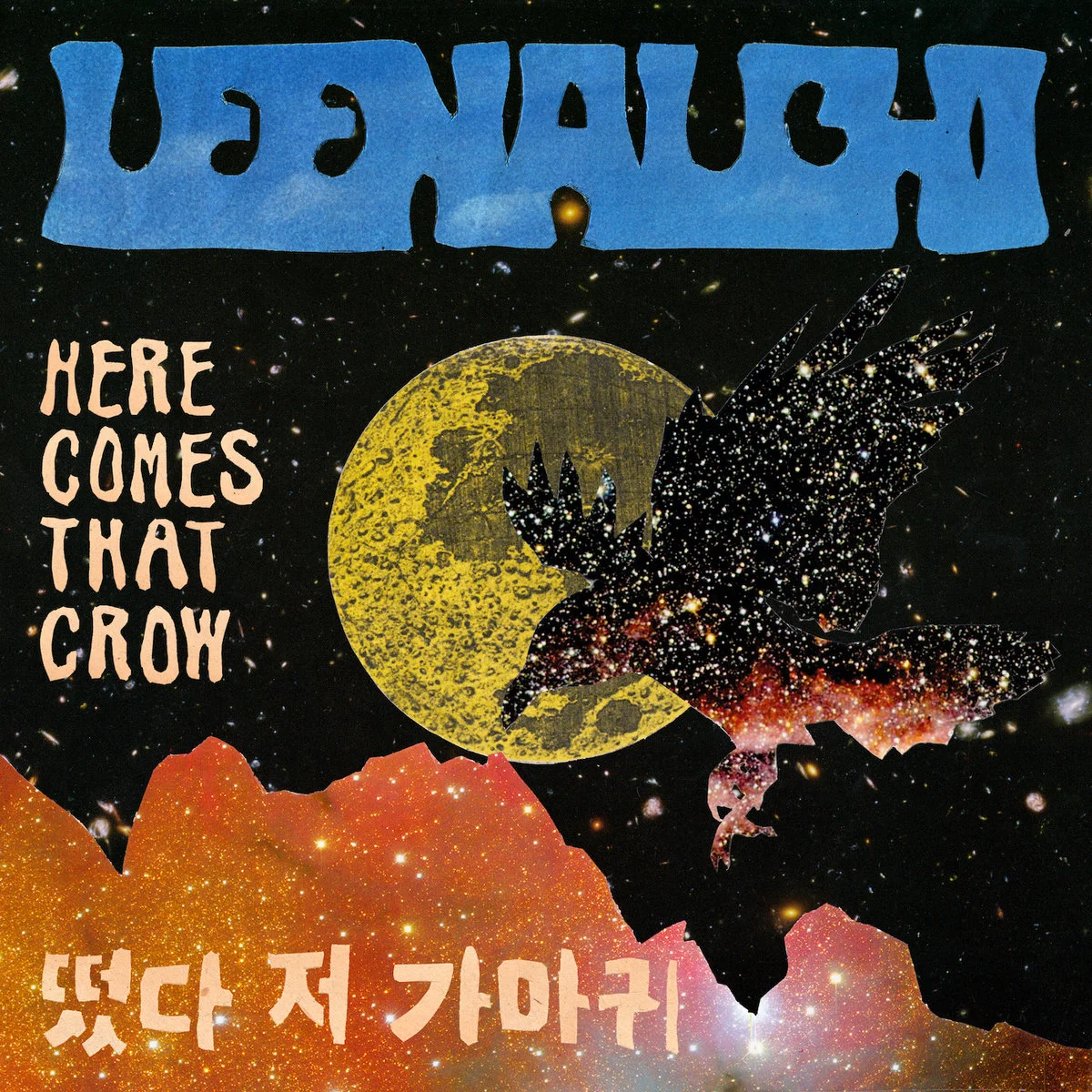
A crow crosses a yellow moon against a star-filled sky. Red-orange mountains glow at the bottom of the frame. The title is written in both English and Korean: 떴다 저 가마귀. The band name, LEENALCHI, sits across the top in blue bubble letters that look vaguely psychedelic, vaguely ancient. The cover art — by Paul Tyree-Francis — gives you the feeling that something historical is about to be folded into something completely strange. 1
That instinct is correct.
Seven people, no guitar, a crow, and Cao Cao
Leenalchi (이날치) is a seven-piece band from Seoul that has been operating since 2019. The name comes from Lee Nal-chi, a 19th-century pansori master. Pansori (판소리) is a form of Korean oral storytelling that dates to the 17th century — one singer, one drummer, a story that can run for hours, drawing from war epics and folk comedy and genuine existential philosophy, all delivered at a volume and emotional pitch that can shake a room. 2
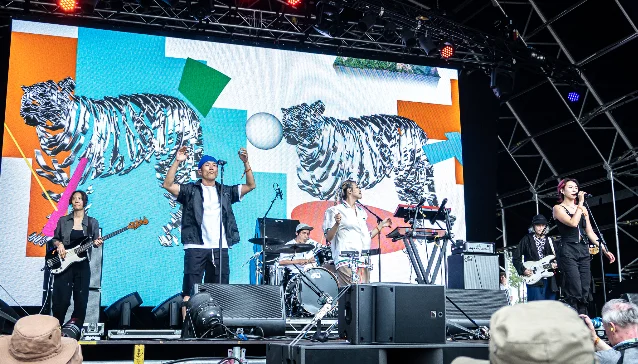
Leenalchi's lineup doesn't look like any other band working today: four lead vocalists — Ahn Yi Ho, Choi Su In, Park Soo Bum, and Ra Seo Jin, all trained in traditional music at Seoul National University — backed by two bass guitarists (Ejae and Jang Young-gyu) and one drummer (Oh Hyung Suk). No guitar. 3 The bass lines drive everything. Rhythm is the argument. When you have four voices trained in a performance tradition built on physical endurance and storytelling instinct, and you put them over locked-in bass grooves, something odd happens: the music sounds both old and exactly now, like it arrived from an alternate timeline where Korean folk and New York art-funk met in a practice room in 1978 and never stopped working.
Luaka Bop — the label David Byrne (of Talking Heads) founded in 1989, the same label behind William Onyeabor and the Floating Points + Pharoah Sanders Promises record — put it simply: Leenalchi "will remind you of the Talking Heads." 3 That's not hyperbole. The comparison has a structural logic: funk-inflected bass, locked rhythms, voices that are more incantation than melody. The difference is that Leenalchi's vocalists aren't singing about modern anxiety — they're adapting stories about warlords and ghosts and the specific humor of people who know death is close.
What happens in the title track
"Here Comes That Crow" is two minutes and 48 seconds long. It's built around a chopped-and-screwed adaptation of Jeokbyeokga (적벽가), one of the five classical pansori narratives — specifically the scene where the warlord Cao Cao surveys his armies at the Battle of Red Cliffs, commanding the full force of history. 1 The band describes the song as an allegory about life's precariousness. The lyrics begin at that same vantage point — Cao Cao, elevated, commanding — then puncture it immediately with the crow's call.
The band wrote a short poem to explain what they're after:
"Doyung doyung goes the small boat floating down the river. Whether the chased or the chaser, no one can stop — just beneath the boards lies the underworld!" 1
Doyung doyung (도용도용) is a Korean onomatopoeia for the gentle rocking motion of a small boat on water. It is almost untranslatable, because its effect is that of playfulness over danger — a small vessel, a precarious crossing, everyone on board moving forward anyway. The joke is that Cao Cao and the peasant on the river and the crow overhead are in the same situation. No one stops.
That structure — historical grandeur suddenly made small by a bird cry — is the beating heart of pansori comedy, and Leenalchi has figured out how to make it feel like it belongs on a playlist next to Khruangbin and ESG.
Why this EP, why now
Here Comes That Crow is Leenalchi's first release on an international independent label. Their two previous studio albums — SUGUNGGA (2020) and HEUNGBOGA (2025) — came out on the Korean label HIKE. 2 Luaka Bop signing them is a meaningful shift in visibility. The label has a track record of routing cult music toward global listeners who didn't know they needed it.
Brian Eno, whose endorsement Luaka Bop cited as "what Brian Eno told us last week," said: "Leenalchi has changed the way I think about music, dancing and Korea. I have never heard anything quite like this." 1 Bandcamp Daily editor Zoe Camp, who put the EP on the Essential Releases list for June 12, called it "an endearingly unpredictable fusion record that strikes the perfect balance between whimsical storytelling and effective songwriting, a serendipitous delight beyond compare." Then she added, of the Eno quote: "Would that man lie to us? I don't think so." 4
Camp zeroed in on the thing that's hardest to explain from the outside: the collision of what she called "ultra-animated vocal melodies" with "economical post-punk rhythms" and "new-wave synths." 4 The six tracks on the EP each do something slightly different with that collision. The title track is the sharpest and strangest; "Ultimate Prescription," the 6:59 closer, is where they let the grooves breathe. The whole thing runs under 23 minutes.
Before any of the major independent music press weighed in — as of this writing, no full review has appeared yet from Pitchfork, The Quietus, or Stereogum — the EP had already gathered at least 64 Bandcamp supporters in the hours after release, which, for an EP on a niche-adjacent label with no algorithmic push, is a signal worth noting. 5
Leenalchi's bassist and producer Jang Young-gyu also composed the scores for Train to Busan (2016), The Wailing (2016), and Sympathy for Mr. Vengeance — films that share with pansori a taste for dark comedy and extreme circumstances handled with a degree of philosophical calm. 6 When he described what it feels like to watch the Coen Brothers' No Country for Old Men alongside a Leenalchi record, he was partly explaining the pansori sensibility: "Death has already drawn near, but has not yet arrived. Even so, people argue, talk, and endure." 7
Where to hear it
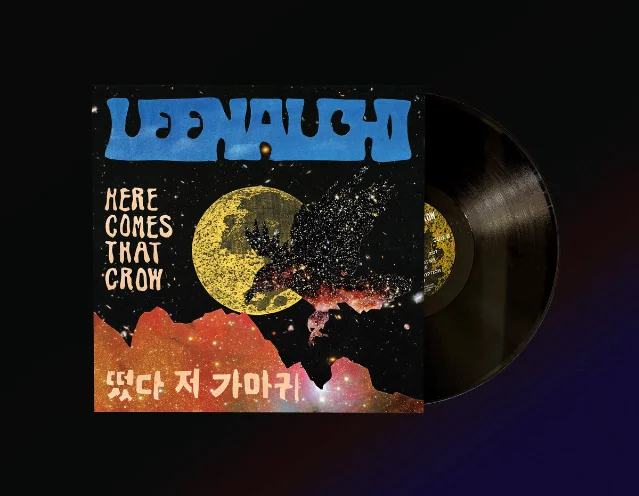
The EP is on Bandcamp now: digital download at $9 (24-bit/96kHz), CD at $14.99, and vinyl at $22.99 — both physical formats shipping around July 3, 2026. 1 They're also on Spotify and Apple Music if Bandcamp isn't your platform.
If you want to hear them live before the album cycle cools off, Leenalchi has a 26-date tour running June through November — North America first (Ottawa Jazz Festival and Vancouver International Jazz Festival on June 19, San Francisco's Stern Grove with Japanese Breakfast on June 28, The Getty in LA on July 11), then Europe in November, closing at Manchester's Band on the Wall on November 29. 1
Start with the title track. Two minutes and 48 seconds. A crow call that turns a war epic into a boat on the river. Then keep going.
Cover art: Paul Tyree-Francis. Cover image from LEENALCHI / Bandcamp.
References
- 1LEENALCHI / Bandcamp: Here Comes That Crow
- 2Wikipedia: Leenalchi
- 3Luaka Bop: LEENALCHI 이날치
- 4Bandcamp Daily: Essential Releases, June 12, 2026
- 5Album of The Year: LEENALCHI - Here Comes That Crow
- 6LemonWire: South Korean Avant-Garde Sensation Leenalchi Announces Global Tour
- 7Cinema Sugar: Leenalchi picks 4 movies to pair with 'Here Comes That Crow'
Add more perspectives or context around this Post.